
Quick answer: To test a power scooter or electric wheelchair motor, set a multimeter to the lowest ohms scale. With the brake engaged, touch the test leads to the top two terminals of the motor plug — a good brake reads between 50 and 85 ohms. Then move the leads to the bottom terminals to read the armature, which should be very low, between 0.8 and 5 ohms. If either spot gives no reading or a dead short (0 ohms), the motor/brake is defective and needs to be replaced.
When a power scooter or electric wheelchair suddenly won't move, it's easy to assume the worst and start pricing out a whole new unit. Don't — a lot of the time it's the motor or the electromagnetic brake, and you can check both in about two minutes with a cheap multimeter. Here's exactly what to do and what the numbers should say.
What You'll Need
- A multimeter (any basic one works), set to the lowest ohms scale
- Access to the motor's plug/terminals
Test 1: The Brake (Top Terminals)
Set your test meter to the lowest ohms scale and verify the brake is engaged. Insert the test leads into the top two terminals in the plug. You're reading the resistance of the brake coil — a healthy brake reads between 50 and 85 ohms.
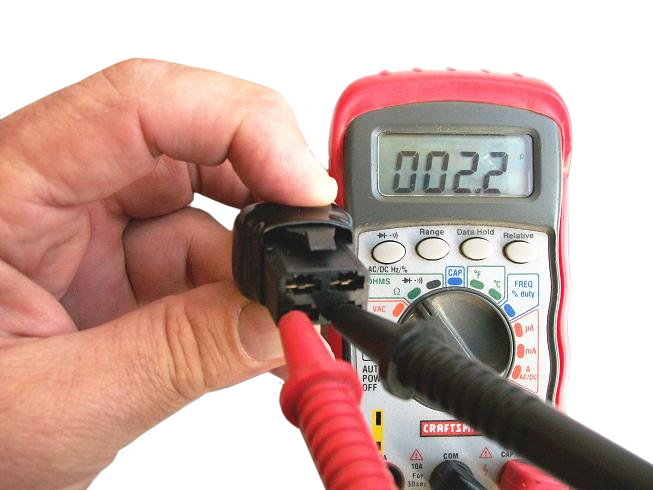
Test 2: The Armature (Bottom Terminals)
Now move the test leads to the bottom terminals. This reads the armature resistance, which is very low — between 0.8 and 5 ohms.
Reading the Results
Here's how to interpret what you see:
- Brake: 50–85 ohms = good.
- Armature: 0.8–5 ohms = good.
- No reading at all (open circuit) in either spot = defective.
- A dead short of 0 ohms in either spot = defective.
If you get a no-reading or a dead short in either location, the motor/brake assembly is bad and needs to be replaced. If both readings fall in range, your motor and brake are fine — the problem is somewhere else (controller, wiring, batteries, or connectors).
Video: Testing a Power Scooter or Wheelchair Motor
Pro tip: before you condemn the motor, make sure the brake is actually engaged and your leads are making solid contact on the right terminals. A loose lead can fake an "open circuit" reading and send you chasing a part that's perfectly good.
Frequently Asked Questions
What should a good power wheelchair or scooter motor read?
The brake (top terminals) should read 50 to 85 ohms, and the armature (bottom terminals) should read between 0.8 and 5 ohms.
What does a 0 ohm or no-reading result mean?
Either one points to a defective motor/brake. No reading means an open circuit; 0 ohms means a dead short. In both cases the assembly needs to be replaced.
What tool do I need to test the motor?
A basic multimeter set to its lowest ohms scale. That's all it takes to check both the brake and armature resistance.
My readings are in range but the chair still won't move. Now what?
If the motor and brake test good, the fault is elsewhere — commonly the batteries, the controller, wiring, or a loose connector. Check those next.
Wrapping Up
Two quick tests and a set of numbers tell you whether the motor's the culprit before you spend a dime. If it does test bad, we carry replacement scooter motors and electric wheelchair motors at HME Medical Shop.
— The HME Parts Team